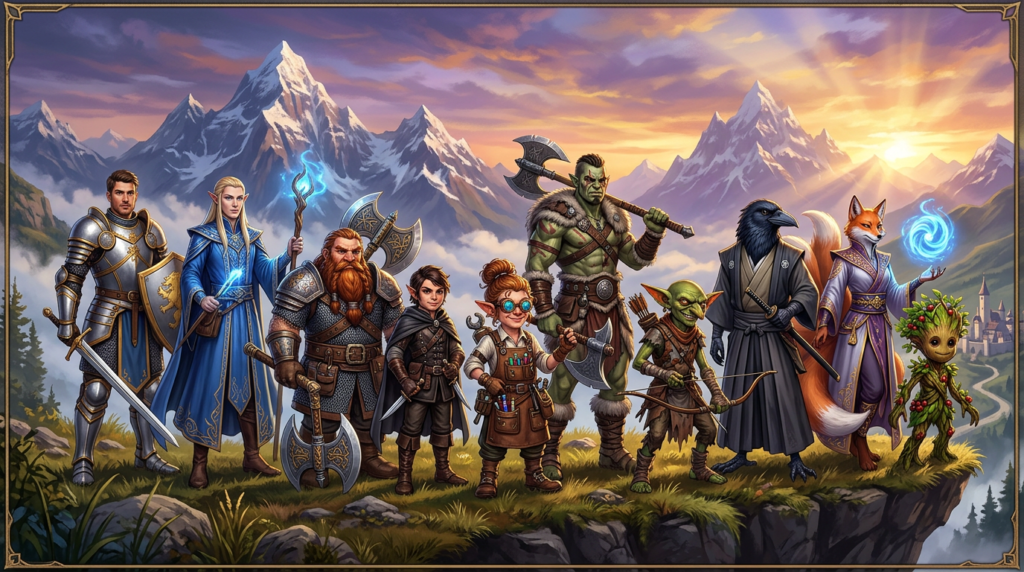
Choosing an ancestry is one of the first important decisions when creating a character in Pathfinder 2e.
Your ancestry helps define your character’s appearance, background, abilities, and connection to the world of Golarion. It can also provide ancestry feats and other unique options as your character gains levels.
Pathfinder Second Edition has a huge selection of ancestries, from familiar fantasy options such as humans and elves to unusual choices such as kobolds, goblins, and leshies.
But which are the best Pathfinder 2e ancestries?
There is no single answer. Pathfinder 2e is designed so that many different character concepts can work effectively. Instead of ranking ancestries purely by combat power, this guide looks at their versatility, unique abilities, roleplaying potential, and the kinds of characters they can create.
Here are 10 of the best Pathfinder 2e ancestries to consider for your next character.
10. Kobold
Best for: Cunning characters, rogues, sorcerers, and dragon-themed characters
Kobolds are small reptilian humanoids with a strong connection to dragons.
They are one of the most recognizable ancestries in the Pathfinder universe and can make excellent characters for players who enjoy clever, mischievous, and unconventional heroes.
Kobolds have a natural connection to dragons, which opens up many interesting character concepts.
You could create a kobold rogue who relies on stealth and deception, a sorcerer with draconic magic, or a charismatic adventurer trying to prove that kobolds deserve more respect.
Why Play a Kobold?
Kobolds are particularly fun for players who enjoy:
- Dragon-themed characters
- Small adventurers
- Stealth
- Trickery
- Unusual character concepts
- Humorous roleplaying
Their ancestry feats can also reinforce their draconic heritage and underground origins.
A kobold is a great choice if you want a character who feels different from the traditional human, elf, or dwarf.
9. Leshy
Best for: Nature-focused characters, druids, and unusual character concepts
Leshies are plant-based humanoids created through primal magic.
They are one of the most visually distinctive ancestries available in Pathfinder 2e.
A leshy can look like a small plant creature, fungus-based being, or another form of natural life, depending on the character concept and available options.
Their connection to nature makes them particularly appealing for druids, rangers, and other characters connected to primal magic.
Why Play a Leshy?
Leshies are an excellent choice if you want:
- A nature-themed character
- A druid or ranger
- A unique appearance
- A strong connection to primal magic
- A memorable roleplaying concept
They also demonstrate one of Pathfinder’s greatest strengths: not every adventurer has to look like a traditional fantasy hero.
8. Goblin
Best for: Chaotic, energetic, and highly customizable characters
Goblins are one of Pathfinder’s most iconic ancestries.
Unlike the stereotypical fantasy goblin, Pathfinder’s goblins can be energetic, curious, adventurous, and surprisingly heroic.
Their unusual worldview can create some fantastic roleplaying opportunities.
A goblin character might be a reckless fighter, an eccentric alchemist, a sneaky rogue, or even a surprisingly serious wizard.
Why Play a Goblin?
Goblins are perfect for players who enjoy:
- Comedic characters
- Unpredictable personalities
- Small adventurers
- Fire and explosions
- Strong roleplaying hooks
- Characters who challenge fantasy stereotypes
Their ancestry options also allow players to create very different types of goblins.
If your group enjoys memorable and eccentric characters, goblins are an excellent choice.
7. Orc
Best for: Warriors, barbarians, champions, and resilient characters
Orcs are one of the classic ancestries of fantasy roleplaying.
In Pathfinder 2e, they can make excellent martial characters, but they are not limited to being simple warriors.
An orc can become almost any class while maintaining a strong identity based on resilience, determination, and overcoming adversity.
Their ancestry feats can provide useful options for characters who want to remain standing when things become dangerous.
Why Play an Orc?
Orcs are particularly suitable for:
- Barbarians
- Fighters
- Champions
- Rangers
- Front-line characters
- Intimidating character concepts
However, an orc wizard, bard, or investigator can be just as interesting.
The contrast between ancestry and class can create a memorable character.
6. Dwarf
Best for: Tough adventurers, fighters, clerics, and traditional fantasy characters
Dwarves are one of the foundations of fantasy roleplaying.
Pathfinder’s dwarves combine many familiar elements of the classic fantasy dwarf with the extensive customization available in Pathfinder 2e.
They are strongly associated with craftsmanship, underground civilizations, traditions, and resilience.
Why Play a Dwarf?
Dwarves work particularly well for players who enjoy:
- Traditional fantasy
- Tough characters
- Heavy armor
- Crafting
- Underground adventures
- Strong cultural traditions
A dwarf can be a classic fighter or champion, but the ancestry can also work with clerics, rangers, investigators, and many other classes.
Dwarves are an excellent option if you want a character who feels immediately at home in a traditional fantasy setting.
5. Gnome
Best for: Spellcasters, curious characters, and eccentric adventurers
Gnomes are among the most interesting ancestries in Pathfinder.
They are curious, energetic, and often fascinated by new experiences.
Their unusual perspective on the world can create excellent roleplaying opportunities.
Gnomes are particularly appealing to players who enjoy magical characters and unconventional personalities.
Why Play a Gnome?
Gnomes are a great fit for:
- Wizards
- Sorcerers
- Bards
- Alchemists
- Curious explorers
- Social characters
Their magical and eccentric nature can also produce some fantastic character concepts.
A gnome adventurer does not necessarily need to be comic relief. You can create a serious scholar, mysterious spellcaster, determined explorer, or eccentric inventor.
4. Halfling
Best for: Rogues, bards, support characters, and players who value versatility
Halflings are another classic fantasy ancestry.
They are small, adaptable, and often associated with courage, luck, and community.
Their size can make them particularly appealing for characters who prefer mobility, stealth, or clever solutions rather than brute force.
Why Play a Halfling?
Halflings work especially well for:
- Rogues
- Bards
- Rangers
- Support characters
- Social characters
- Stealth-focused builds
They are also excellent for roleplayers who want an apparently ordinary character who gradually becomes an unlikely hero.
A halfling adventurer can easily fit into almost any Pathfinder campaign.
3. Elf
Best for: Agile characters, spellcasters, and players who enjoy classic fantasy
Elves are one of the most recognizable ancestries in fantasy RPGs.
Pathfinder’s elves have a long history, strong connections to magic and nature, and a variety of ancestry options that allow players to customize their characters.
Their long lifespan can also create interesting roleplaying opportunities.
An elf might have decades or even centuries of experiences that shape their personality and worldview.
Why Play an Elf?
Elves are particularly attractive for:
- Wizards
- Rangers
- Rogues
- Sorcerers
- Magically inclined characters
- Agile builds
They are also an excellent choice for players who want a classic fantasy aesthetic.
The wide range of elf ancestry options means that two elf characters can feel completely different.
2. Human
Best for: Almost any character concept
Humans may seem like the most ordinary ancestry on this list, but in Pathfinder 2e they are incredibly versatile.
Humans can fit almost any class, background, or campaign.
More importantly, their ancestry options can provide significant character customization.
A human fighter, human wizard, human rogue, and human cleric can all play completely differently.
Why Play a Human?
Humans are a great choice if you value:
- Flexibility
- Customization
- Versatility
- Multiclass character concepts
- Straightforward character creation
- Almost any class
Humans are especially useful for new Pathfinder players because they do not force you into a particular fantasy archetype.
If you already have a specific character concept in mind, human is often an easy way to build it.
1. Fetchling
Best for: Shadow-themed characters, spellcasters, rogues, and dark fantasy
Fetchlings are humanoids with a strong connection to the Shadow Plane.
They are one of the most distinctive options for players who want something beyond the traditional fantasy ancestries.
Their connection to shadows and the Shadow Plane can create fascinating character concepts.
A fetchling could be a mysterious rogue who moves through darkness, a spellcaster fascinated by shadow magic, or an adventurer trying to understand their connection to the Shadow Plane.
Why Play a Fetchling?
Fetchlings are particularly interesting for players who enjoy:
- Dark fantasy
- Shadow magic
- Mysterious characters
- Stealth
- Planar adventures
- Unusual character concepts
Their distinctive lore also gives the Game Master plenty of opportunities to connect a character’s ancestry to the campaign setting.
If you want a character who immediately stands out from the rest of the party, a fetchling is worth considering.
Other Great Pathfinder 2e Ancestries
These 10 ancestries are only a small selection of the possibilities available in Pathfinder 2e.
Depending on the campaign and character concept, other ancestries can be equally interesting.
Some alternatives worth exploring include:
Catfolk
Catfolk are excellent for players who want agile characters with feline traits and a strong sense of adventure.
Lizardfolk
Lizardfolk are a good option for players interested in reptilian characters, survival, and primal themes.
Tengu
Tengu offer a distinctive crow-like aesthetic and can be particularly fun for players who enjoy unusual cultures and character concepts.
Android
Androids are an excellent choice for science-fantasy campaigns and characters interested in questions about identity, technology, and mortality.
Kitsune
Kitsune are fox-like humanoids with strong connections to shapeshifting, magic, and folklore.
Automaton
Automatons offer a very different character concept, allowing players to explore what it means to be a constructed being in the Pathfinder world.
How to Choose the Best Pathfinder 2e Ancestry
Choosing an ancestry does not need to be complicated.
Start by thinking about the character you want to play.
Do you want to be a heavily armored warrior?
A mysterious spellcaster?
A stealthy rogue?
A charismatic bard?
A nature-loving druid?
Once you know the general concept, look for an ancestry that complements it.
However, you do not always need to choose an ancestry that is traditionally associated with your class.
Some of the most memorable Pathfinder characters come from unexpected combinations.
For example:
- Orc Wizard: A powerful scholar who rejected traditional expectations.
- Goblin Champion: A chaotic little hero determined to protect others.
- Dwarf Rogue: A master of stealth who surprises everyone.
- Elf Barbarian: An ancient warrior who channels centuries of anger.
- Human Druid: A flexible adventurer deeply connected to nature.
- Kobold Fighter: A small warrior determined to prove their strength.
Pathfinder 2e gives you plenty of room to experiment.
Are Some Pathfinder 2e Ancestries Better Than Others?
Not necessarily.
One of the most important things to understand about Pathfinder 2e is that an ancestry should not be judged only by its combat statistics.
Your class, ability scores, feats, equipment, party composition, and playstyle all contribute to how effective a character will be.
More importantly, the ancestry you choose should fit the character you actually want to play.
A theoretically useful ancestry will not necessarily make the game more enjoyable if it does not fit your character concept.
Instead of asking:
“What is the strongest Pathfinder 2e ancestry?”
consider asking:
“What ancestry best fits the character I want to play?”
That question will usually lead to a more interesting character.
Final Thoughts
Pathfinder 2e offers an enormous variety of ancestries, making character creation one of the most enjoyable parts of the game.
Humans provide flexibility and customization.
Elves offer classic fantasy and magical potential.
Halflings combine adaptability with a classic underdog fantasy.
Gnomes are perfect for curious and eccentric characters.
Dwarves provide a strong traditional fantasy identity.
Orcs are excellent for resilient and determined adventurers.
Goblins offer unusual personalities and plenty of roleplaying opportunities.
Leshies bring nature and primal magic into character creation.
Kobolds are perfect for dragon-themed and unconventional characters.
And fetchlings offer a distinctive connection to shadows and planar fantasy.
Ultimately, the best Pathfinder 2e ancestry is the one that helps you create a character you actually want to spend dozens of sessions playing.
Pathfinder is at its best when players experiment with different combinations and create characters that feel unique.
So do not be afraid to choose an unexpected ancestry-class combination.
Sometimes the most unusual character becomes the most memorable one.
Frequently Asked Questions
What is the best ancestry in Pathfinder 2e?
There is no universally best Pathfinder 2e ancestry. Different ancestries offer different abilities, ancestry feats, and roleplaying opportunities, so the best choice depends on your class and character concept.
What is the best Pathfinder 2e ancestry for beginners?
Human is a straightforward option for beginners because it is flexible and can work with almost any class. Dwarf and elf are also familiar choices for players coming from traditional fantasy RPGs.
What are ancestries in Pathfinder 2e?
In Pathfinder 2e, ancestry is the term used for what many other fantasy RPGs call a race. Your ancestry represents your character’s heritage and provides ancestry features and access to ancestry feats.
Can you play any class with any ancestry in Pathfinder 2e?
Generally, yes. Pathfinder 2e allows a wide variety of ancestry and class combinations. Some combinations may have more natural thematic connections, but players are not required to follow traditional fantasy stereotypes.
Are Pathfinder 2e ancestries balanced?
Pathfinder 2e is designed so that different ancestries can be used effectively in many different character builds. Their strengths differ, but choosing an ancestry does not automatically determine whether a character will be successful.