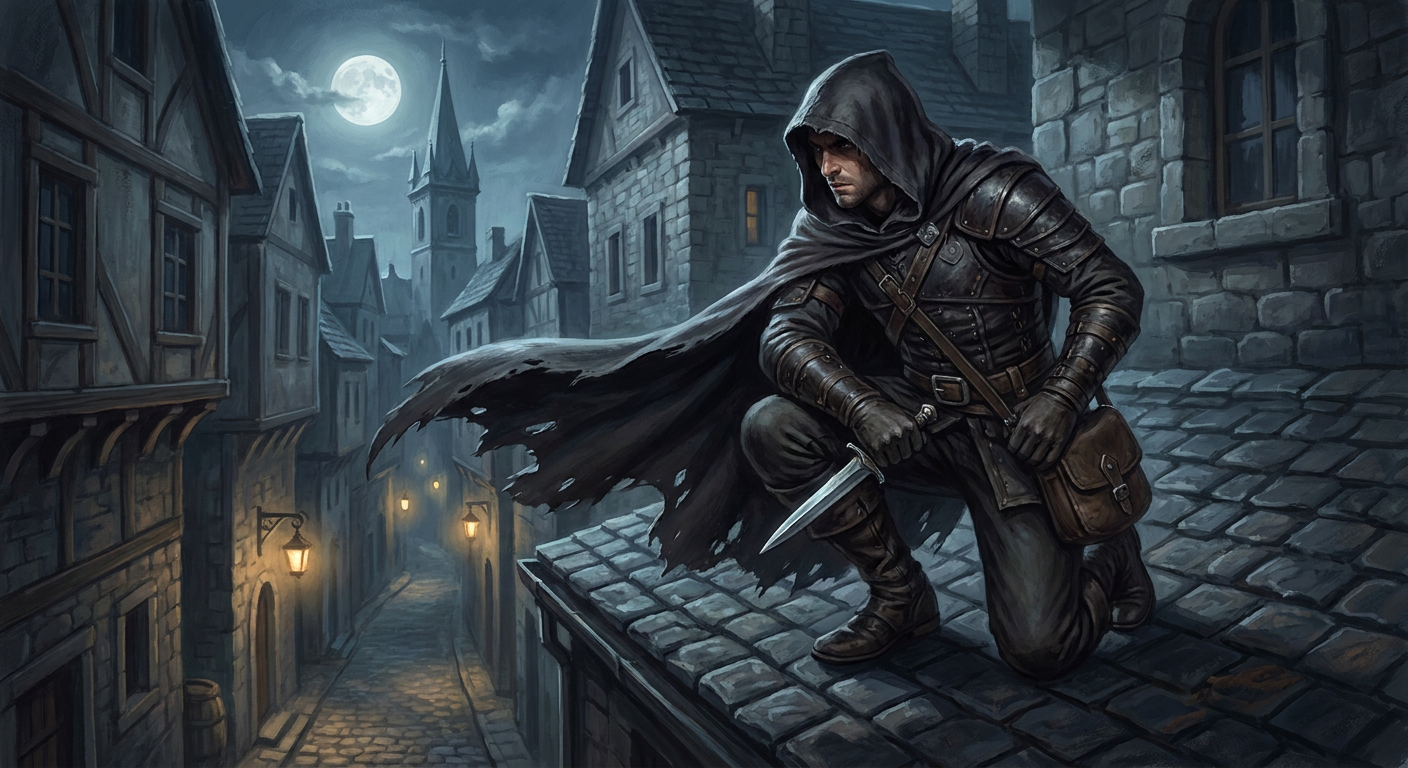
The Rogue is one of the most iconic and versatile classes in Dungeons & Dragons. Masters of stealth, precision, agility, and cunning, Rogues excel at striking when enemies least expect it. Whether you’re sneaking through a castle, disarming deadly traps, picking locks, or delivering a devastating Sneak Attack, the Rogue rewards careful planning and tactical play.
Despite their reputation as thieves and assassins, Rogues can be much more than criminals. They might be spies, detectives, treasure hunters, scouts, bounty hunters, diplomats, or charismatic swashbucklers. Their flexibility makes them one of the most rewarding classes in the game.
In this complete guide, you’ll learn how the Dungeons & Dragons Rogue works, including Hit Dice, class features, Sneak Attack, Expertise, subclasses, ability scores, equipment, strengths, weaknesses, and tips for creating the perfect Rogue.
Table of Contents
- What Is the Rogue in Dungeons & Dragons?
- The Rogue’s Role in the Party
- Rogue Class Overview
- Hit Dice and Hit Points
- Ability Scores
- Rogue Proficiencies
- Sneak Attack
- Expertise
- Thieves’ Cant
- Cunning Action
- Uncanny Dodge
- Evasion
- Reliable Talent
- Rogue Subclasses
- Best Weapons
- Best Species
- Strengths and Weaknesses
- Is the Rogue Good for Beginners?
- Tips for Playing a Rogue
- Frequently Asked Questions
What Is the Rogue in Dungeons & Dragons?
The Rogue is a martial class that specializes in precision rather than brute force.
Instead of standing on the front lines, Rogues rely on:
- Stealth
- Mobility
- Precision attacks
- Skills
- Tactical positioning
A well-played Rogue can deal tremendous damage while avoiding danger altogether.
Outside combat, Rogues are equally impressive, often serving as the party’s expert in exploration, infiltration, and problem-solving.
The Rogue’s Role in the Party
A Rogue can fulfill several important roles:
- Scout
- Skill expert
- Damage dealer
- Infiltrator
- Trap disarmer
- Lockpicker
- Face (in some builds)
Because of their extensive skill options, Rogues are useful in almost every type of campaign.
Rogue Class Overview
| Feature | Details |
|---|---|
| Primary Ability | Dexterity |
| Hit Die | d8 |
| Armor | Light Armor |
| Weapons | Simple Weapons, Hand Crossbows, Longswords, Rapiers, Shortswords |
| Saving Throws | Dexterity & Intelligence |
| Main Role | Precision Damage & Utility |
| Spellcasting | Only certain subclasses |
| Difficulty | Easy to Learn, Hard to Master |
Hit Dice and Hit Points
The Rogue is more durable than most spellcasters but less resilient than frontline warriors.
Hit Die
The Rogue uses a d8 Hit Die.
Compared to other classes:
| Class | Hit Die |
|---|---|
| Wizard | d6 |
| Rogue | d8 |
| Cleric | d8 |
| Fighter | d10 |
| Barbarian | d12 |
This gives Rogues a respectable amount of health while encouraging them to avoid prolonged melee combat.
Hit Points at Level 1
At first level, your hit points equal:
8 + your Constitution modifier
Example:
- Constitution 14 (+2)
- Starting HP = 10
Hit Points at Higher Levels
Each additional Rogue level grants:
- 1d8 + Constitution modifier, or
- 5 + Constitution modifier (average value)
Ability Scores
Dexterity
Dexterity is the Rogue’s most important ability.
It affects:
- Attack rolls
- Damage with finesse and ranged weapons
- Armor Class
- Initiative
- Stealth
- Acrobatics
Most Rogues prioritize Dexterity above everything else.
Constitution
Higher Constitution means:
- More hit points
- Better survivability
Intelligence
Useful for:
- Investigation
- Arcana
- Certain subclasses like the Arcane Trickster
Charisma
Important for Rogues who focus on:
- Persuasion
- Deception
- Intimidation
Swashbucklers often benefit from a higher Charisma score.
Rogue Proficiencies
Armor
Rogues are proficient with:
- Light Armor
Heavy armor would reduce their mobility and stealth effectiveness.
Weapons
Rogues can use:
- Daggers
- Shortswords
- Rapiers
- Hand Crossbows
- Shortbows
- Simple Weapons
They primarily favor finesse and ranged weapons.
Saving Throws
Rogues are proficient in:
- Dexterity
- Intelligence
Dexterity saves are among the most common in D&D, making this a valuable proficiency.
Sneak Attack
Sneak Attack is the Rogue’s signature ability.
Once per turn, you deal extra damage when:
- You have advantage on the attack roll, or
- An ally is within 5 feet of your target and certain conditions are met.
Sneak Attack damage increases as you level up.
| Rogue Level | Sneak Attack |
|---|---|
| 1 | 1d6 |
| 3 | 2d6 |
| 5 | 3d6 |
| 7 | 4d6 |
| 9 | 5d6 |
| 11 | 6d6 |
| 13 | 7d6 |
| 15 | 8d6 |
| 17 | 9d6 |
| 19 | 10d6 |
Although Rogues usually make only one attack per turn, Sneak Attack allows that strike to hit exceptionally hard.
Expertise
At Level 1, Rogues gain Expertise.
This feature allows them to double their proficiency bonus in selected skills.
Popular choices include:
- Stealth
- Perception
- Investigation
- Acrobatics
- Persuasion
- Thieves’ Tools
This makes Rogues some of the best skill specialists in D&D.
Thieves’ Cant
Rogues also learn Thieves’ Cant, a secret language used by criminals and underground organizations.
Messages can be hidden within ordinary conversations, allowing Rogues to communicate discreetly.
Cunning Action
At Level 2, Rogues gain one of their strongest abilities:
Cunning Action
As a Bonus Action, a Rogue can:
- Dash
- Disengage
- Hide
This dramatically improves mobility and survivability.
Uncanny Dodge
Starting at Level 5, Uncanny Dodge allows Rogues to use their Reaction to halve the damage from an attack they can see.
Combined with their mobility, this makes Rogues surprisingly resilient.
Evasion
At Level 7, Rogues gain Evasion.
When making a Dexterity saving throw against effects like a dragon’s breath or a Fireball spell:
- Success = No damage
- Failure = Half damage
This is one of the best defensive abilities in the game.
Reliable Talent
At Level 11, Reliable Talent ensures that skilled Rogues rarely fail at tasks they are proficient in.
Whenever you roll lower than 10 on certain ability checks, you treat the roll as a 10 instead.
This makes high-level Rogues incredibly dependable outside combat.
Rogue Subclasses
At Level 3, Rogues choose a Roguish Archetype.
Thief
The classic Rogue.
Excels at:
- Fast Hands
- Climbing
- Exploration
- Using objects efficiently
Great for beginners.
Assassin
Masters of eliminating targets before combat truly begins.
Features include:
- Assassinate
- Disguise
- Infiltration
Excellent for stealth-focused campaigns.
Arcane Trickster
Combines Rogue abilities with Wizard magic.
Gains:
- Illusions
- Enchantments
- Mage Hand enhancements
Ideal for players who enjoy magical trickery.
Swashbuckler
A charismatic duelist.
Excels at:
- One-on-one combat
- Mobility
- Initiative
- Social encounters
Perfect for pirate-style characters.
Soulknife
Creates psychic blades from pure mental energy.
Offers:
- Psionic abilities
- Silent communication
- Incredible versatility
Best Weapons for Rogues
Popular choices include:
| Weapon | Damage | Properties |
|---|---|---|
| Rapier | 1d8 | Finesse |
| Shortsword | 1d6 | Finesse, Light |
| Dagger | 1d4 | Finesse, Light, Thrown |
| Shortbow | 1d6 | Ammunition |
| Hand Crossbow | 1d6 | Light |
The Rapier is often considered the best melee weapon for Rogues due to its high damage and Finesse property.
Best Species for Rogues
Excellent choices include:
- Elf
- Halfling
- Human
- Tiefling
- Gnome
- Tabaxi
Modern D&D rules allow virtually any species to become an effective Rogue.
Strengths of the Rogue
- Exceptional skill versatility
- High single-target damage
- Excellent mobility
- Outstanding stealth
- Strong exploration abilities
- Difficult to pin down
- Great action economy
Weaknesses of the Rogue
- Lower durability than Fighters or Barbarians
- Relies heavily on positioning
- Sneak Attack requires planning
- Limited crowd control
- Few attacks per turn
Is the Rogue Good for Beginners?
Yes.
The Rogue is easy to understand at a basic level but offers tremendous room for mastery.
Players who enjoy tactical positioning, clever thinking, and creative role-playing often find the Rogue one of the most satisfying classes in D&D.
Tips for Playing a Rogue
- Prioritize Dexterity above all else.
- Look for opportunities to trigger Sneak Attack every round.
- Use Cunning Action frequently.
- Stay mobile instead of trading blows.
- Invest in skills that complement your party.
- Think creatively during exploration and social encounters.
A Rogue succeeds through intelligence, preparation, and precision rather than brute force.
Final Thoughts
The Dungeons & Dragons Rogue is one of the most dynamic and rewarding classes in the game. Its combination of devastating precision, unmatched mobility, and exceptional skill versatility allows it to shine both in and out of combat.
Whether you’re infiltrating a heavily guarded fortress, solving intricate mysteries, or striking from the shadows with a perfectly timed Sneak Attack, the Rogue rewards players who enjoy planning ahead and thinking creatively.
If you want a character who excels at stealth, exploration, and precision combat while remaining useful in almost every situation, the Rogue is an outstanding choice for your next D&D adventure.
Want to learn about the other D&D classes? checkout our article here: Dungeons & Dragons Classes Explained: A Complete Beginner’s Guide
Frequently Asked Questions (FAQ)
What is the Rogue class in Dungeons & Dragons?
The Rogue is a martial class specializing in stealth, agility, precision attacks, and skills. It excels at dealing high single-target damage and overcoming challenges through clever tactics.
What Hit Die does the Rogue use?
The Rogue uses a d8 Hit Die, giving it moderate durability while encouraging a mobile, hit-and-run playstyle.
How does Sneak Attack work?
Sneak Attack allows the Rogue to deal extra damage once per turn when attacking with a finesse or ranged weapon, provided certain conditions—such as having advantage or an adjacent ally—are met.
What is the best ability score for a Rogue?
Dexterity is the Rogue’s most important ability score because it improves attacks, damage, Armor Class, initiative, and many key skills.
Which Rogue subclass is best for beginners?
The Thief is an excellent starting subclass thanks to its straightforward abilities, while the Arcane Trickster and Swashbuckler offer more specialized and tactical playstyles.
Can Rogues use magic?
Most Rogues are non-spellcasters, but the Arcane Trickster subclass gains access to Wizard spells, primarily from the Illusion and Enchantment schools.
Is the Rogue a good class for beginners?
Yes. The Rogue has accessible core mechanics but offers significant tactical depth, making it enjoyable for both new and experienced players.