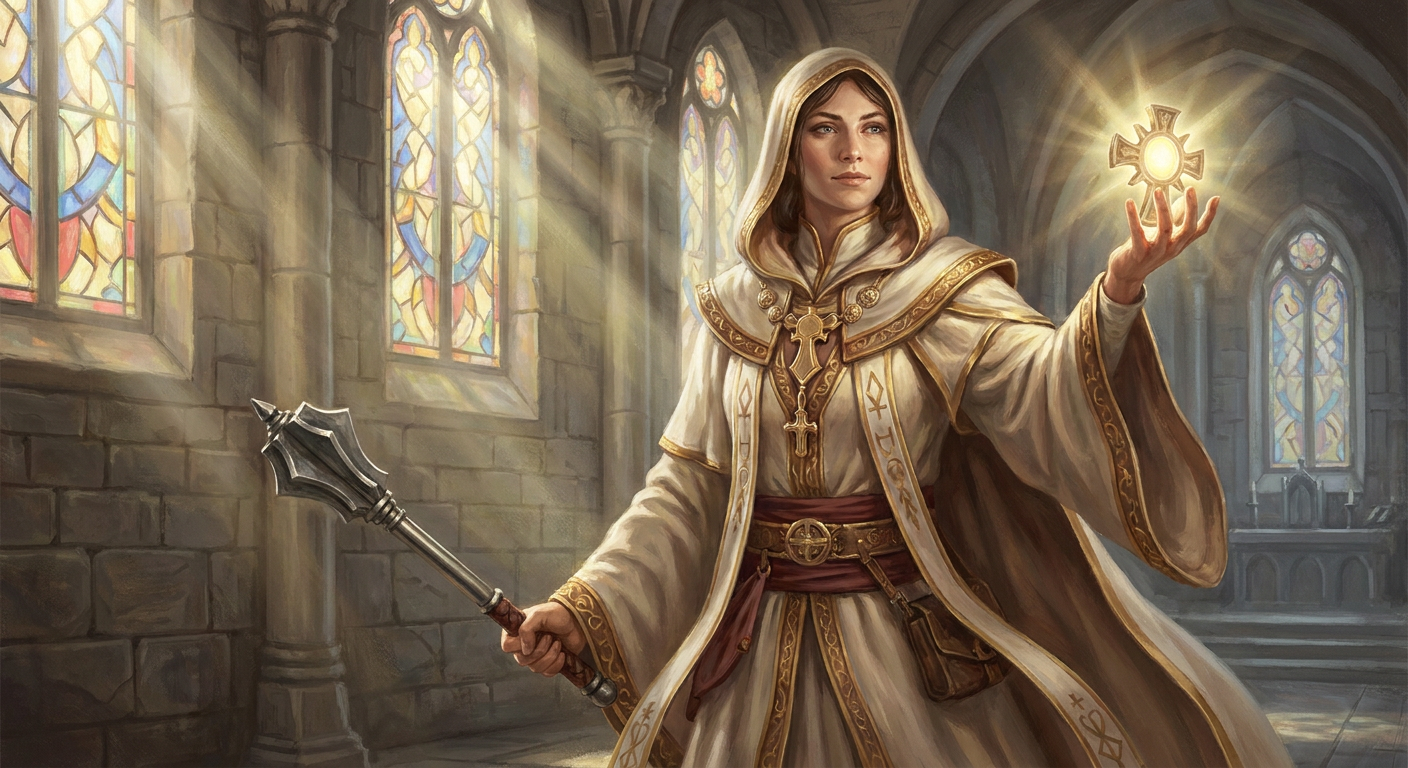
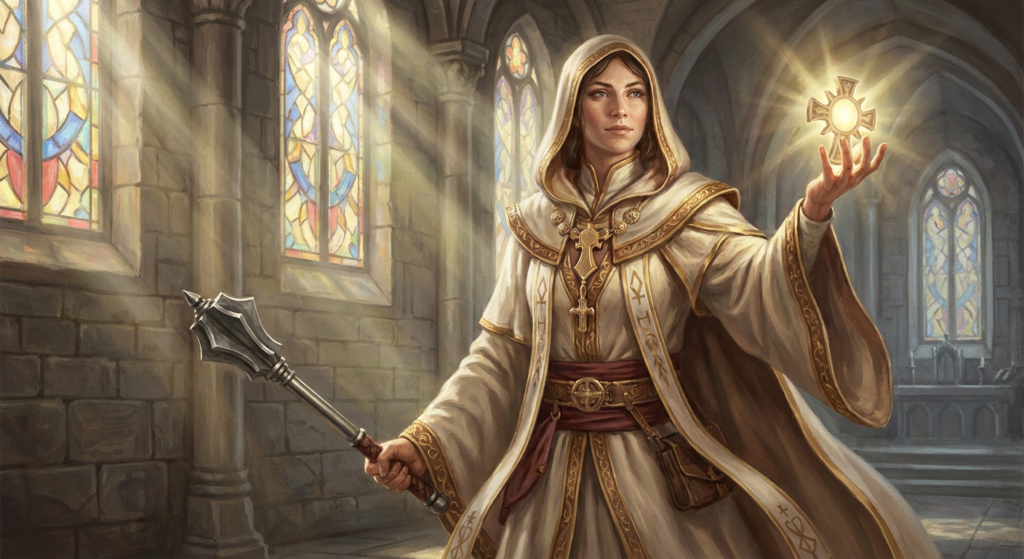
The Cleric is one of the most versatile and powerful classes in Dungeons & Dragons. While many new players think of the Cleric as simply a healer, this class is capable of much more. Clerics can unleash divine magic, protect allies, destroy undead, control the battlefield, and even become formidable frontline warriors.
Their power comes from faith and devotion to a deity, divine force, or sacred ideal. Whether serving a god of war, life, knowledge, nature, or justice, every Cleric channels divine energy to perform extraordinary feats.
In this complete guide, you’ll learn how the Dungeons & Dragons Cleric works, including Hit Dice, spellcasting, Divine Domains, Channel Divinity, ability scores, equipment, strengths, weaknesses, and tips for building the perfect Cleric character.
Table of Contents
- What Is the Cleric in Dungeons & Dragons?
- The Cleric’s Role in the Party
- Cleric Class Overview
- Hit Dice and Hit Points
- Ability Scores
- Cleric Proficiencies
- Divine Spellcasting
- Cantrips
- Preparing Spells
- Spell Slots
- Channel Divinity
- Turn Undead
- Divine Domains
- Best Cleric Spells
- Best Equipment
- Best Species for Clerics
- Strengths and Weaknesses
- Is the Cleric Good for Beginners?
- Tips for Playing a Cleric
- Frequently Asked Questions
What Is the Cleric in Dungeons & Dragons?
The Cleric is a full spellcasting class that draws its magical abilities from divine power rather than arcane study.
Unlike Wizards or Sorcerers, Clerics gain their spells through faith and their connection to a higher power. Depending on their chosen Divine Domain, they can specialize in healing, protection, combat, knowledge, or even destructive magic.
Far from being limited to supporting allies, Clerics are among the most adaptable characters in D&D.
The Cleric’s Role in the Party
A Cleric can fill multiple roles depending on their build:
- Healer
- Support caster
- Tank
- Spellcaster
- Battlefield controller
- Damage dealer
- Protector
Because of this flexibility, nearly every adventuring party benefits from having a Cleric.
Cleric Class Overview
| Feature | Details |
|---|---|
| Primary Ability | Wisdom |
| Hit Die | d8 |
| Armor | Light Armor, Medium Armor, Shields (some Domains grant Heavy Armor) |
| Weapons | Simple Weapons |
| Saving Throws | Wisdom & Charisma |
| Main Role | Divine Spellcaster & Support |
| Spellcasting | Full Divine |
| Difficulty | Beginner-Friendly |
Hit Dice and Hit Points
Clerics are significantly tougher than most spellcasters.
Hit Die
The Cleric uses a d8 Hit Die.
Hit Points at Level 1
At first level, your hit points equal:
8 + your Constitution modifier
Example:
- Constitution 16 (+3)
- Starting HP = 11
Hit Points at Higher Levels
Each time you gain a Cleric level, you gain:
- 1d8 + Constitution modifier, or
- 5 + Constitution modifier (average value, depending on your group’s rules)
Ability Scores
Wisdom
Wisdom is the Cleric’s most important ability score.
It determines:
- Spell attack rolls
- Spell Save DC
- Number of prepared spells
- Perception and Insight skills
A high Wisdom score is essential for every Cleric.
Constitution
Constitution provides:
- More hit points
- Better Concentration checks
- Greater survivability
Many Clerics spend much of combat maintaining concentration spells.
Strength or Dexterity
Your choice depends on your build.
Strength is ideal for:
- Heavy armor
- Melee combat
- War Domain Clerics
Dexterity benefits:
- Initiative
- Light or medium armor builds
- Dexterity saving throws
Cleric Proficiencies
Armor
Clerics begin with proficiency in:
- Light Armor
- Medium Armor
- Shields
Some Divine Domains also grant:
- Heavy Armor
Weapons
Clerics are proficient with:
- All Simple Weapons
Certain Domains grant proficiency with martial weapons as well.
Saving Throws
Clerics are proficient in:
- Wisdom
- Charisma
These help resist many magical effects involving fear, charm, banishment, or possession.
Divine Spellcasting
Clerics are full spellcasters, gaining access to spell slots from 1st through 9th level.
Unlike Sorcerers, Clerics prepare spells each day from the entire Cleric spell list, giving them exceptional flexibility.
Cantrips
Cantrips are spells that can be cast without expending spell slots.
Popular Cleric cantrips include:
Guidance
One of the most useful support cantrips in the game, adding a bonus to ability checks.
Sacred Flame
A radiant attack spell that ignores cover in many situations.
Thaumaturgy
Creates impressive divine effects for role-playing and intimidation.
Toll the Dead
One of the strongest damage cantrips available to Clerics.
Preparing Spells
Each day, Clerics prepare a number of spells equal to:
Cleric Level + Wisdom Modifier
Example:
A Level 6 Cleric with 18 Wisdom (+4) can prepare:
10 spells
Because preparation happens after a long rest, Clerics can adapt to changing adventures.
Spell Slots
Clerics use spell slots to cast leveled spells.
Examples include:
1st-Level Spells
- Cure Wounds
- Healing Word
- Bless
- Guiding Bolt
- Shield of Faith
3rd-Level Spells
- Spirit Guardians
- Revivify
- Beacon of Hope
5th-Level Spells
- Greater Restoration
- Flame Strike
9th-Level Spells
- Mass Heal
- True Resurrection
Channel Divinity
Beginning at Level 2, Clerics gain Channel Divinity.
This powerful feature allows them to channel divine energy for special effects.
Each Divine Domain grants unique Channel Divinity options.
Turn Undead
One of the Cleric’s signature abilities.
Using Channel Divinity, the Cleric forces undead creatures to flee.
At higher levels, weaker undead may even be instantly destroyed.
This makes Clerics exceptionally powerful in undead-themed campaigns.
Divine Domains
At Level 1, every Cleric chooses a Divine Domain.
This determines many of the class’s abilities and playstyle.
Life Domain
The classic healer.
Strengths include:
- Superior healing
- Defensive support
- Team survivability
Perfect for players who enjoy protecting allies.
War Domain
A battle-focused Cleric.
Features include:
- Heavy armor
- Martial weapon proficiency
- Bonus attacks
- Improved combat abilities
Ideal for frontline characters.
Light Domain
Masters of radiant fire and holy light.
Excellent for:
- Area damage
- Offensive spellcasting
- Fighting undead
Knowledge Domain
Experts in:
- Lore
- Investigation
- Ancient history
- Skills
A great choice for exploration-heavy campaigns.
Tempest Domain
Clerics who command storms.
Specialize in:
- Lightning
- Thunder
- High burst damage
Trickery Domain
Focused on:
- Illusions
- Stealth
- Deception
Perfect for clever and unconventional players.
Best Cleric Spells
Level 1
- Bless
- Healing Word
- Cure Wounds
- Guiding Bolt
Level 2
- Spiritual Weapon
- Lesser Restoration
- Hold Person
Level 3
- Spirit Guardians
- Revivify
- Beacon of Hope
Level 5
- Greater Restoration
- Flame Strike
Level 9
- Mass Heal
- True Resurrection
Best Equipment for Clerics
Typical equipment includes:
- Shield
- Mace
- Warhammer (if proficient)
- Holy Symbol
- Chain Mail (where available)
Your equipment should complement your chosen Divine Domain.
Best Species for Clerics
Excellent choices include:
- Human
- Dwarf
- Aasimar
- Elf
- Dragonborn
- Goliath
Modern D&D rules allow virtually any species to become an effective Cleric.
Strengths of the Cleric
- Outstanding healing
- Excellent support abilities
- Powerful defensive magic
- Strong battlefield control
- Flexible spell preparation
- Durable compared to other spellcasters
- Effective in both melee and ranged combat
- One of the most versatile classes in D&D
Weaknesses of the Cleric
- Limited offensive cantrips
- Heavy reliance on concentration spells
- Can become a priority target for enemies
- Some Domains are more specialized than others
- Resource management becomes important during long adventuring days
Is the Cleric Good for Beginners?
Absolutely.
The Cleric is one of the best classes for new players because it combines:
- Strong defenses
- Straightforward mechanics
- Flexible spellcasting
- Valuable support abilities
Even if you focus on healing, you’ll still contribute meaningful damage and utility throughout a campaign.
Tips for Playing a Cleric
- Prioritize Wisdom when assigning ability scores.
- Keep Healing Word prepared for emergencies.
- Cast Bless early in difficult battles.
- Use Spirit Guardians to control the battlefield.
- Don’t spend every turn healing—preventing damage is often more effective.
- Position yourself where you can support multiple allies.
- Coordinate your spells with the rest of the party.
A great Cleric isn’t just someone who restores hit points—they keep the entire party alive through smart decisions and divine power.
Final Thoughts
The Dungeons & Dragons Cleric is far more than a healer. With powerful divine magic, exceptional versatility, and the ability to excel in nearly every aspect of the game, the Cleric remains one of the strongest and most reliable classes in D&D.
Whether you’re shielding companions from danger, calling down radiant energy to defeat undead, or standing beside the Fighter on the front lines, the Cleric always has a meaningful role to play.
If you enjoy adaptable characters who combine faith, magic, strategy, and teamwork, the Cleric is an outstanding choice for your next Dungeons & Dragons adventure.
Do you want to learn about the other Dungeons & Dragons classes? check out our article about the topic here: Dungeons & Dragons Classes Explained: A Complete Beginner’s Guide
Frequently Asked Questions (FAQ)
What is the Cleric class in Dungeons & Dragons?
The Cleric is a full divine spellcasting class that uses Wisdom to cast spells. Clerics can heal allies, protect the party, deal damage, and adapt to many different roles depending on their Divine Domain.
What Hit Die does the Cleric use?
The Cleric uses a d8 Hit Die, making it tougher than most spellcasters while still providing access to powerful magic.
What is the Cleric’s main ability score?
Wisdom is the Cleric’s primary ability score because it determines spell attack rolls, Spell Save DC, and the number of spells the Cleric can prepare each day.
What is Channel Divinity?
Channel Divinity is a core Cleric feature that allows the character to channel divine power for special effects, including the iconic Turn Undead ability and powerful Domain-specific abilities.
What is the best Cleric Domain?
Popular choices include the Life Domain for healing, the War Domain for frontline combat, the Light Domain for offensive spellcasting, and the Tempest Domain for lightning and thunder damage. The best Domain depends on your preferred playstyle.
Is the Cleric only a healer?
No. While Clerics are excellent healers, they can also serve as tanks, damage dealers, support casters, and battlefield controllers. Their versatility is one of their greatest strengths.
Is the Cleric a good class for beginners?
Yes. The Cleric is beginner-friendly thanks to its strong defenses, flexible spell preparation, and ability to contribute in nearly every situation, making it one of the most reliable classes in Dungeons & Dragons.