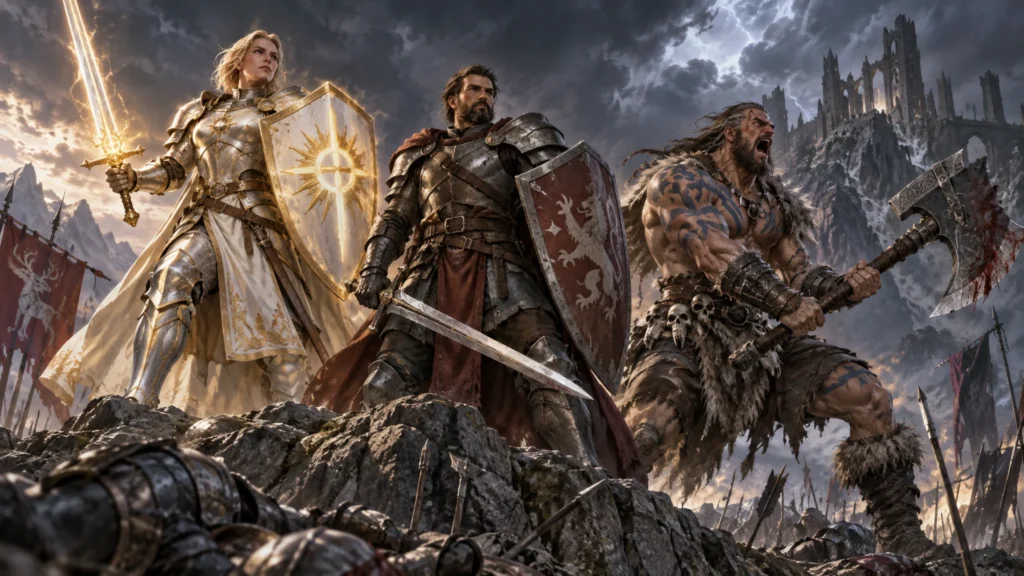
Every Dungeons & Dragons party needs someone who can stand between dangerous enemies and vulnerable companions. While Fighters, Barbarians, and Paladins are traditionally associated with this role, several other classes can also become incredibly durable characters.
In D&D 5e, however, being a tank is about more than having a massive number of hit points. A good tank must survive powerful attacks, control enemy movement, protect allies, and make it difficult for opponents to ignore them.
Unlike many MMORPGs, D&D doesn’t have a universal aggro system that forces enemies to attack a particular character. Instead, effective tanks use positioning, defensive abilities, battlefield control, and tactical decisions to protect their party.
Whether you want to create an almost unstoppable Barbarian, a heavily armored Paladin, or a shape-shifting Druid capable of absorbing enormous amounts of punishment, there are several ways to build a powerful tank.
Here are 10 of the best D&D 5e tank builds, using the revised 2024 fifth-edition rules.
What Makes a Good Tank in D&D 5e?
Before looking at individual builds, it’s important to understand the characteristics that make a character effective at protecting a party.
A strong tank usually combines several of the following elements.
1. High Armor Class
Armor Class (AC) determines how difficult it is for enemies to hit your character with attack rolls.
Heavy armor, shields, defensive spells, and certain class features can significantly improve your AC.
However, a high AC doesn’t protect against everything. Many spells and monster abilities require saving throws instead of attack rolls.
2. High Hit Points
Having a large pool of hit points allows you to survive attacks that would otherwise incapacitate another character.
Barbarians are particularly effective in this area because of their large Hit Dice and defensive Rage features.
3. Damage Resistance
Damage resistance reduces damage of the corresponding type, making it one of the most valuable defensive mechanics in D&D.
For example, a Barbarian using Rage can resist certain types of damage, allowing them to remain in combat longer.
4. Battlefield Control
A good tank should be able to interfere with enemy movement and protect vulnerable party members.
Abilities that push, knock down, restrain, frighten, or reposition enemies can make a tremendous difference during combat.
5. Party Protection
The best tanks don’t simply survive. They help their companions survive as well.
Some characters can grant temporary hit points, impose disadvantages, improve allies’ defenses, or create defensive auras.
The ideal tank combines personal durability with abilities that benefit the entire party.
1. Path of the World Tree Barbarian – The Ultimate Defensive Tank
Best for: Players who want exceptional durability and battlefield control.
The Path of the World Tree Barbarian is one of the most interesting defensive builds introduced in the 2024 Player’s Handbook.
Unlike a traditional Barbarian who focuses primarily on dealing damage, this subclass combines durability, support abilities, and battlefield manipulation.
Its connection to Yggdrasil, the legendary World Tree, allows it to channel life energy and manipulate the position of enemies.
Recommended build
| Character option | Recommendation |
|---|---|
| Class | Barbarian |
| Subclass | Path of the World Tree |
| Species | Goliath or Orc |
| Background | Soldier |
| Primary ability | Strength |
| Secondary abilities | Constitution, Dexterity |
| Armor | Medium armor |
| Equipment | Shield and versatile weapon or two-handed weapon |
| Combat role | Defensive frontline and battlefield control |
Ability score priorities
- Strength – Improves melee attacks and important combat abilities.
- Constitution – Increases your hit points and survivability.
- Dexterity – Helps with initiative, saving throws, and medium armor.
- Wisdom – Useful for perception and resisting certain effects.
Essential abilities
The most important feature is Vitality of the Tree, unlocked at level 3.
Whenever you activate Rage, you gain temporary hit points equal to your Barbarian level. You can also grant temporary hit points to another creature near you at the start of your turns while Rage is active.
At level 6, Branches of the Tree gives you an especially useful defensive tool.
When a creature you can see starts its turn within 30 feet of you, you can use your Reaction to potentially teleport it to an unoccupied space near you. The ability can also reduce its Speed to 0 for the remainder of that turn.
This makes it particularly useful for pulling dangerous enemies away from vulnerable companions.
How to play this build
Your objective is to remain close to dangerous enemies while keeping your allies within reach.
Activate Rage before or during important encounters, use your temporary hit points to absorb damage, and position yourself where you can intercept approaching threats.
When an enemy attempts to reach your party’s Wizard or Sorcerer, Branches of the Tree can help bring that threat closer to you instead.
Why this build is powerful: It combines personal durability, protection for nearby allies, and battlefield control. It is one of the strongest examples of a Barbarian designed specifically to function as a tank.
2. Wild Heart Barbarian – The Damage-Resistant Survivor
Best for: Players who want to absorb large amounts of damage.
The Wild Heart Barbarian is an excellent choice for anyone who wants to become extremely difficult to defeat.
Its connection to primal animal spirits provides different defensive and utility benefits, allowing you to adapt your character to the needs of the campaign.
The Bear option is particularly interesting for defensive builds.
Recommended build
| Character option | Recommendation |
|---|---|
| Class | Barbarian |
| Subclass | Path of the Wild Heart |
| Species | Goliath or Dwarf |
| Background | Farmer |
| Primary ability | Strength |
| Secondary abilities | Constitution, Dexterity |
| Armor | Medium armor |
| Equipment | Shield and one-handed weapon |
| Combat role | Damage absorption and frontline defense |
Ability score priorities
- Strength – Your primary combat ability.
- Constitution – Essential for increasing your hit points.
- Dexterity – Improves initiative and defensive capabilities.
- Wisdom – Useful for saving throws and exploration.
Essential abilities
The defining mechanic is Rage.
While raging, the Barbarian gains several benefits, including resistance to bludgeoning, piercing, and slashing damage.
The Wild Heart subclass expands your options with animal-inspired abilities.
The Bear option is especially attractive for players who want additional damage resistance while raging. It provides resistance to additional damage types beyond the usual physical damage covered by Rage.
At higher levels, other animal aspects offer additional defensive and utility benefits.
How to play this build
Your main objective is to stay in the middle of combat and absorb attacks that would otherwise threaten your party.
Use your Rage when facing dangerous opponents and position yourself between enemies and vulnerable allies.
A shield and one-handed weapon are excellent choices if you want to prioritize defense over maximum damage.
Why this build is powerful: Few characters can combine the Barbarian’s natural durability with additional damage resistance so effectively. The Wild Heart Barbarian is an excellent choice for players who want to survive prolonged encounters.
3. Berserker Barbarian – The Aggressive Frontline Tank
Best for: Players who want a durable tank that can also deal significant damage.
Not every tank needs to sacrifice offensive capabilities.
The Berserker Barbarian is designed for aggressive combat, combining the traditional defensive strengths of the Barbarian with additional damage potential.
Although it is less focused on protecting allies than the World Tree subclass, its offensive pressure makes it a dangerous opponent that enemies cannot easily ignore.
Recommended build
| Character option | Recommendation |
|---|---|
| Class | Barbarian |
| Subclass | Path of the Berserker |
| Species | Orc or Goliath |
| Background | Soldier |
| Primary ability | Strength |
| Secondary abilities | Constitution, Dexterity |
| Armor | Medium armor |
| Equipment | Greatsword or greataxe |
| Combat role | Aggressive frontline damage dealer |
Ability score priorities
- Strength – Maximizes your melee combat effectiveness.
- Constitution – Provides additional hit points.
- Dexterity – Helps with initiative and defense.
- Wisdom – Useful against several dangerous effects.
Essential abilities
The Berserker’s most important feature is Frenzy.
When you activate Rage, Frenzy allows you to deal additional damage when you use Reckless Attack, making you particularly dangerous against important targets.
Barbarians also benefit from several defensive mechanics, including their damage resistance while raging and their excellent hit point progression.
How to play this build
Unlike the World Tree Barbarian, this character focuses more on eliminating threats than controlling them.
Use Reckless Attack when the additional offensive potential is worth the defensive risk, and concentrate on dangerous enemies before they can overwhelm your companions.
A two-handed weapon is a natural choice.
Why this build is powerful: It combines the Barbarian’s impressive durability with excellent offensive pressure. It is ideal for players who want to be both a frontline survivor and a serious damage threat.
4. Battle Master Fighter – The Tactical Shield Tank
Best for: Players who want a heavily armored character with excellent battlefield control.
The Battle Master Fighter is one of the most versatile martial builds in D&D.
While many Fighters focus primarily on damage, Battle Masters gain access to maneuvers that allow them to control enemies, protect allies, and influence the outcome of combat.
This makes the subclass particularly effective for players who want a traditional defensive warrior.
Recommended build
| Character option | Recommendation |
|---|---|
| Class | Fighter |
| Subclass | Battle Master |
| Species | Human or Dwarf |
| Background | Soldier |
| Primary ability | Strength |
| Secondary abilities | Constitution, Dexterity |
| Armor | Heavy armor |
| Equipment | Shield and longsword |
| Combat role | Defensive frontline and tactical control |
Ability score priorities
- Strength – Improves melee attacks.
- Constitution – Increases your hit points.
- Dexterity – Useful for initiative and saving throws.
- Wisdom – Helps resist certain effects.
Essential abilities
The Fighter has several useful defensive features.
Second Wind allows you to recover hit points during combat, while heavy armor and shield proficiency make it possible to achieve a high AC.
The Battle Master subclass introduces Superiority Dice and combat maneuvers.
Some particularly useful options include:
- Bait and Switch: Helps improve your own or an ally’s defense by changing positions.
- Goading Attack: Encourages an enemy to focus on you by imposing a disadvantage on its attacks against other targets, subject to the maneuver’s conditions.
- Pushing Attack: Can move enemies away from vulnerable positions.
- Trip Attack: Can knock an enemy prone, potentially making it easier for your companions to attack in melee.
How to play this build
Your objective is to control the battlefield rather than simply deal as much damage as possible.
Use your shield and heavy armor to remain close to dangerous enemies.
Save your Superiority Dice for situations where they can protect an ally, disrupt an enemy, or prevent a dangerous opponent from reaching the party’s backline.
Why this build is powerful: The Battle Master combines the Fighter’s durability with tactical options that make it easier to protect other characters.
5. Eldritch Knight Fighter – The Magical Defensive Tank
Best for: Players who want to combine heavy armor, weapons, and defensive magic.
The Eldritch Knight is one of the best choices for players who want to create a traditional armored warrior with magical abilities.
Unlike a Wizard, an Eldritch Knight doesn’t rely entirely on spells. It uses weapons and armor as its primary tools while employing magic to improve survivability and versatility.
Recommended build
| Character option | Recommendation |
|---|---|
| Class | Fighter |
| Subclass | Eldritch Knight |
| Species | Goliath or Human |
| Background | Soldier |
| Primary ability | Strength |
| Secondary abilities | Constitution, Intelligence |
| Armor | Heavy armor |
| Equipment | Shield and longsword |
| Combat role | Defensive frontline and magical support |
Ability score priorities
- Strength – Important for weapon attacks.
- Constitution – Improves survivability.
- Intelligence – Supports your spellcasting.
- Dexterity – Useful for initiative and saving throws.
Recommended spells
The Eldritch Knight can use magic to improve its defenses.
Some useful options include:
- Shield: Temporarily increases AC in response to an attack.
- Protection from Evil and Good: Offers protection against certain creature types.
- Magic Missile: Provides a reliable ranged offensive option.
- Misty Step: Helps you reposition when available.
Spell availability depends on character level and the Eldritch Knight’s spellcasting rules.
How to play this build
Use heavy armor and a shield to maintain a strong defensive profile.
Your weapon remains your primary source of damage, but your spells give you additional ways to survive difficult encounters.
Shield is particularly useful when an enemy attack would otherwise hit you.
You can also use your Fighter abilities, such as Action Surge and Second Wind, to remain effective during prolonged encounters.
Why this build is powerful: The Eldritch Knight combines the durability of a Fighter with magical defensive options, making it a versatile frontline character.
6. Oath of the Ancients Paladin – The Party’s Defensive Guardian
Best for: Players who want to protect the entire party rather than just themselves.
The Paladin is naturally suited to the tank role.
It combines heavy armor, shields, healing, melee combat, and defensive magic. Among the available subclasses, the Oath of the Ancients is particularly attractive for players who want to protect their companions.
Recommended build
| Character option | Recommendation |
|---|---|
| Class | Paladin |
| Subclass | Oath of the Ancients |
| Species | Dwarf or Human |
| Background | Noble |
| Primary abilities | Strength, Charisma |
| Secondary ability | Constitution |
| Armor | Heavy armor |
| Equipment | Shield and longsword |
| Combat role | Defensive frontline and party protection |
Ability score priorities
- Strength – Improves melee attacks.
- Charisma – Supports Paladin spells and important class features.
- Constitution – Increases your durability.
- Wisdom – Useful for saving throws and perception.
Essential abilities
One of the most important Paladin features is Aura of Protection, which improves the saving throws of nearby allies.
The Oath of the Ancients also provides Aura of Warding at level 7.
Under the 2024 rules, this feature grants you and nearby allies resistance to specific damage types, making it especially valuable against certain magical threats.
The Paladin also has access to Lay on Hands, allowing you to restore hit points to yourself or other creatures.
Recommended spells
- Bless: Improves the attack rolls and saving throws of affected allies.
- Shield of Faith: Provides an AC bonus to a creature.
- Cure Wounds: Restores hit points.
- Aid: Increases maximum and current hit points for affected creatures.
- Protection from Evil and Good: Helps defend against certain supernatural enemies.
How to play this build
Stay close to your companions whenever possible.
Your defensive auras are most valuable when multiple party members are within range.
Use your shield and heavy armor to remain near the most dangerous enemies, and use Lay on Hands when someone needs emergency healing.
Why this build is powerful: The Ancients Paladin is not simply difficult to kill. It also provides defensive benefits to nearby allies, making it one of the most effective party-oriented tanks.
7. Oath of Devotion Paladin – The Nearly Unbreakable Knight
Best for: Players who want a classic armored knight with strong defensive abilities.
The Oath of Devotion Paladin is another excellent defensive option.
While the Ancients Paladin focuses on magical protection and supporting the party, the Devotion Paladin emphasizes a traditional heroic warrior who stands against dangerous enemies.
Recommended build
| Character option | Recommendation |
|---|---|
| Class | Paladin |
| Subclass | Oath of Devotion |
| Species | Human or Dwarf |
| Background | Soldier or Noble |
| Primary abilities | Strength, Charisma |
| Secondary ability | Constitution |
| Armor | Heavy armor |
| Equipment | Shield and longsword |
| Combat role | Defensive warrior and frontline protector |
Ability score priorities
- Strength – Essential for melee attacks.
- Charisma – Supports your Paladin features and spells.
- Constitution – Improves your hit points.
- Wisdom – Useful for resisting dangerous effects.
Essential abilities
The Paladin’s Aura of Protection is one of its most valuable defensive tools.
The Devotion subclass also offers Aura of Devotion, which protects you and nearby allies against the Charmed condition.
Another important defensive option is Sacred Weapon, which improves your offensive effectiveness and can make it easier to deal with dangerous opponents.
The Paladin’s Lay on Hands feature provides additional healing when necessary.
Recommended equipment
- Heavy armor.
- Shield.
- Longsword or another one-handed weapon.
- Defensive equipment appropriate to your campaign.
How to play this build
The Devotion Paladin is a straightforward defensive warrior.
Stay close to your allies, engage dangerous enemies, and use your auras to help protect the party.
You can also use your healing abilities to keep companions alive during difficult encounters.
Why this build is powerful: The combination of heavy armor, healing, defensive auras, and strong melee capabilities makes the Devotion Paladin a dependable frontline character.
8. Circle of the Moon Druid – The Shape-Shifting Tank
Best for: Players who want to absorb damage through multiple forms and remain highly versatile.
The Circle of the Moon Druid is one of the most distinctive tank builds in D&D.
Instead of relying on traditional armor and shields, this character uses Wild Shape to transform into powerful beasts.
The 2024 version of the subclass significantly improves the defensive potential of this playstyle.
Recommended build
| Character option | Recommendation |
|---|---|
| Class | Druid |
| Subclass | Circle of the Moon |
| Species | Human or Goliath |
| Background | Guide |
| Primary ability | Wisdom |
| Secondary abilities | Constitution, Dexterity |
| Armor | Depends on equipment and campaign rules |
| Equipment | Druidic focus and appropriate defensive gear |
| Combat role | Shape-shifting frontline tank |
Ability score priorities
- Wisdom – Supports your spellcasting.
- Constitution – Improves survivability and concentration.
- Dexterity – Helps with initiative and defense.
- Strength – Less important when relying on Wild Shape.
Essential abilities
The main defensive feature is Circle Forms, unlocked at level 3.
When using Wild Shape, the Moon Druid gains improved Armor Class and temporary hit points equal to three times its Druid level.
This creates an additional defensive buffer without requiring you to rely exclusively on your normal hit points.
At level 6, Improved Circle Forms further enhances your transformation abilities and improves your Constitution saving throws.
The Druid also has access to spells that can improve survivability and control enemies.
Recommended spells
- Healing Word: Provides emergency healing.
- Entangle: Restrains enemies in an area.
- Faerie Fire: Helps allies attack affected enemies.
- Cure Wounds: Restores hit points.
- Moonbeam: Provides an offensive option against enemies.
How to play this build
Use Wild Shape when you expect to face dangerous enemies.
Your transformed form can absorb attacks while you remain close to the frontline.
Remember that the Moon Druid is not simply a character with an enormous amount of extra health. Its temporary hit points, defensive features, and spellcasting give it several ways to remain useful.
Why this build is powerful: The Moon Druid combines temporary hit points, improved defenses, spellcasting, and transformation abilities. It is an excellent option for players who want a tank with considerable versatility.
9. War Domain Cleric – The Armored Divine Warrior
Best for: Players who want to combine heavy armor, divine magic, and frontline combat.
Clerics are often associated with healing, but the class can also become an effective frontline defender.
The War Domain is particularly suitable for players who want to combine martial combat with divine magic.
Recommended build
| Character option | Recommendation |
|---|---|
| Class | Cleric |
| Subclass | War Domain |
| Species | Dwarf or Human |
| Background | Soldier |
| Primary ability | Wisdom |
| Secondary abilities | Constitution, Strength |
| Armor | Heavy armor |
| Equipment | Shield and warhammer |
| Combat role | Frontline support and defensive magic |
Ability score priorities
- Wisdom – Supports your Cleric spellcasting.
- Constitution – Improves survivability and concentration.
- Strength – Helps with melee attacks.
- Dexterity – Useful for initiative and saving throws.
Recommended spells
A War Cleric can combine defensive magic with useful offensive options.
Consider spells such as:
- Bless: Improves your party’s attack rolls and saving throws.
- Shield of Faith: Increases a creature’s AC.
- Cure Wounds: Provides healing.
- Aid: Improves the hit point capacity of affected creatures.
- Spiritual Weapon: Offers an additional offensive option.
How to play this build
Your heavy armor and shield allow you to operate closer to the frontline than many other spellcasters.
Use your spells to improve the party’s defenses, and engage enemies when necessary.
You should not try to replace a Fighter or Barbarian entirely. Instead, your strength comes from combining frontline durability with the ability to heal and support your companions.
Why this build is powerful: The War Cleric offers a good balance between defense, magical support, and melee combat. It is particularly useful in parties that need an additional frontline character without sacrificing spellcasting.
10. College of Valor Bard – The Defensive Support Tank
Best for: Players who want to protect allies while remaining effective in combat and social encounters.
The Bard is not the first class most players think of when discussing tank builds.
However, the College of Valor provides several abilities that make it possible to create a surprisingly effective frontline support character.
Unlike a traditional Barbarian or Fighter, this build focuses on improving the defenses of the entire party.
Recommended build
| Character option | Recommendation |
|---|---|
| Class | Bard |
| Subclass | College of Valor |
| Species | Human or Dwarf |
| Background | Noble |
| Primary ability | Charisma |
| Secondary abilities | Dexterity, Constitution |
| Armor | Medium armor |
| Equipment | Shield and one-handed weapon |
| Combat role | Support, defensive frontline, and spellcasting |
Ability score priorities
- Charisma – Determines the effectiveness of your Bard spells.
- Constitution – Improves survivability and concentration.
- Dexterity – Helps with initiative and defense.
- Wisdom – Useful for perception and saving throws.
Essential abilities
The College of Valor provides training with medium armor, shields, and martial weapons.
Its most interesting defensive feature is Combat Inspiration.
A creature that has one of your Bardic Inspiration dice can use it as a Reaction when hit by an attack to increase its AC against that attack, potentially causing the attack to miss.
This allows you to help protect your companions even when you are not directly attacking an enemy.
At level 6, Extra Attack also makes the Bard more effective in frontline combat.
Recommended spells
- Healing Word: Provides emergency healing.
- Faerie Fire: Helps allies attack enemies.
- Dissonant Whispers: Can disrupt an enemy’s positioning.
- Heroism: Provides temporary hit points and protection against fear.
- Enhance Ability: Helps allies with important ability checks.
How to play this build
Your main objective is to support your companions while remaining close enough to contribute to combat.
Use Bardic Inspiration to improve your allies’ defenses, maintain useful spells, and engage enemies when necessary.
Unlike a traditional tank, you should avoid becoming the primary target of every enemy attack. Your real strength is making the entire party more difficult to defeat.
Why this build is powerful: The Valor Bard combines medium armor, a shield, defensive support, and spellcasting. It is a particularly interesting choice for players who want a more unusual tank.
How to Make Your D&D Tank Even More Durable
Choosing the right class is only the beginning. Several additional decisions can significantly improve your character’s defensive capabilities.
1. Choose the Right Armor
Armor has a major impact on your Armor Class.
Heavy armor is generally an excellent choice for Fighters and Paladins, while Barbarians and some other characters often prefer medium armor.
A shield can provide an additional defensive advantage, although using one means giving up the ability to use a two-handed weapon.
2. Consider Defensive Feats
Feats can improve your survivability and make your character more effective at protecting allies.
Some options worth investigating include:
- Shield Master: Offers defensive benefits and additional options when using a shield.
- Sentinel: Helps you punish enemies that try to move away or attack your companions under the feat’s conditions.
- Tough: Increases your maximum hit points.
- War Caster: Particularly useful for spellcasters who want to maintain concentration.
- Heavy Armor Master: Improves your defenses against certain physical attacks.
Always check the level prerequisites and exact wording in the 2024 rules before selecting a feat.
3. Don’t Ignore Constitution
Constitution is one of the most important ability scores for a defensive character.
A high Constitution score provides more hit points and improves Constitution saving throws.
For spellcasters, it can also help maintain concentration on important defensive spells.
4. Use Positioning to Protect Your Allies
A tank should think about where enemies can move and which party members are vulnerable.
Standing between a powerful monster and your Wizard can be more valuable than dealing additional damage.
However, remember that enemies are controlled by the Dungeon Master. Some monsters can fly, teleport, use ranged attacks, or simply ignore your character.
5. Learn When to Use Defensive Abilities
Many powerful defensive abilities have limited uses.
Using Rage, spells, reactions, or other resources too early can leave you vulnerable during a more dangerous encounter.
Try to save important abilities for moments when they can prevent serious damage or protect an endangered companion.
Final Thoughts: What Is the Best Tank Build in D&D 5e?
The best tank build depends on what you want to accomplish during an adventure.
If your priority is surviving enormous amounts of damage, the Wild Heart Barbarian is an excellent choice.
If you want to protect your companions and control enemy movement, the Path of the World Tree Barbarian is one of the most interesting options available.
For players who prefer heavy armor and traditional defensive gameplay, the Oath of the Ancients Paladin and Battle Master Fighter are excellent alternatives.
Meanwhile, the Circle of the Moon Druid offers a completely different approach to durability through Wild Shape, while the Valor Bard demonstrates that even traditionally support-oriented classes can contribute to frontline defense.
Ultimately, a good tank is not simply the character with the highest AC or the most hit points.
The best tanks make the entire party harder to defeat.
Frequently Asked Questions
What is the best tank class in D&D 5e?
The Barbarian, Fighter, and Paladin are traditionally the strongest choices for dedicated frontline tanks. The Barbarian excels at absorbing damage, the Fighter offers excellent defensive equipment and tactical options, and the Paladin provides powerful protection for nearby allies.
What is the best D&D 5e tank build for beginners?
The Wild Heart Barbarian is a straightforward option for players who want to focus on durability and damage resistance. The Fighter is another excellent choice because its mechanics are relatively easy to understand.
What is the highest AC you can get in D&D 5e?
There isn’t one universal maximum Armor Class. The result depends on character level, equipment, spells, class features, and the combination of rules being used. Some builds can temporarily reach extremely high AC values through defensive spells and abilities.
Is a Barbarian better than a Fighter as a tank?
It depends on the type of tank you want to play. Barbarians are particularly effective at absorbing certain types of damage, while Fighters can achieve excellent AC and use defensive maneuvers to control combat.
Can a Paladin be a tank in D&D 5e?
Absolutely. Paladins are among the best party-oriented tanks because they combine heavy armor, shields, healing, defensive spells, and Aura of Protection. Some subclasses also provide additional defensive benefits to nearby allies.
Can a Druid be a tank in D&D 5e?
Yes. The Circle of the Moon Druid is particularly effective in this role. Its Wild Shape abilities provide additional defensive benefits and temporary hit points, allowing it to operate on the frontline.
Does D&D 5e have an aggro or taunt system?
No. D&D 5e does not have a universal aggro mechanic that forces enemies to attack a specific character. However, certain abilities can impose disadvantages on attacks against other creatures, restrict movement, reposition enemies, or otherwise encourage opponents to engage the tank.
Is high AC more important than hit points?
Neither is universally more important. High AC helps prevent attacks from hitting, while hit points allow you to survive attacks that get through. A strong tank should ideally have both, together with protection against saving-throw effects and other dangerous abilities.