Introduction: Why Dice Matter in TTRPGs
In tabletop RPGs, dice are used to determine outcomes and add randomness to storytelling.
They help decide:
- Success or failure of actions
- Combat damage
- Skill checks
- Random events
Types of RPG Dice (Polyhedral Set)
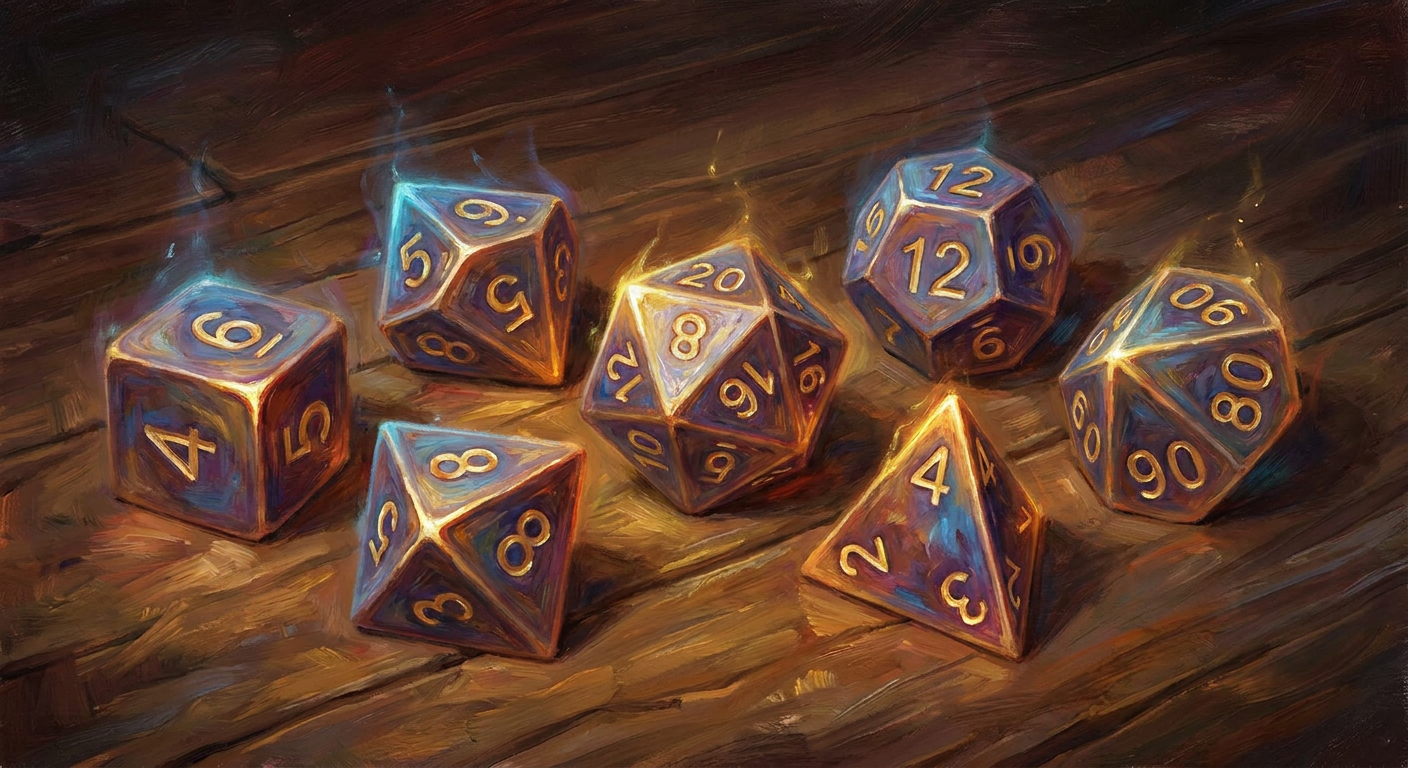
A standard RPG dice set includes:
d4 (4-sided die)
- Used for small damage or effects
- Example: daggers, minor spells
d6 (6-sided die)
- Most common dice (like normal dice)
- Used for damage, stats, and checks
d8 (8-sided die)
- Moderate damage dice
- Often used by martial weapons
d10 (10-sided die)
- Used for percentages or specific mechanics
d12 (12-sided die)
- Rare but powerful damage dice
d20 (20-sided die)
- The most important dice in systems like D&D
- Used for:
- Attack rolls
- Skill checks
- Saving throws
What is a “Roll Check”?
A roll check happens when you try to do something uncertain:
Example:
- Climbing a wall
- Persuading a guard
- Attacking an enemy
You roll a d20 and add modifiers from your character stats.
What Are Modifiers?
Modifiers are bonuses or penalties added to dice rolls:
- Strength → physical actions
- Dexterity → agility and accuracy
- Intelligence → knowledge-based tasks
- Charisma → social interactions
Critical Success and Failure
- Natural 20 (crit success): best possible outcome
- Natural 1 (crit failure): worst possible outcome
These moments often create dramatic storytelling.
Conclusion
RPG dice are not just random tools — they are storytelling engines that create tension, excitement, and unpredictability in every session.